
Several factors should be considered when deciding what to grow. Here are some:
- What do you eat the most?
- What is most expensive for you to buy at the grocery store?
- What grows best in your soil and climate?
- Do you have health issues for which there are foods that are known to help?
- Do you want to focus more on calories to feed your family (e.g. potatoes) or medicinal plants to keep you well (e.g. many herbs), or gifts for your neighbours (e.g. tomatoes and basil)?
Occasionally, you may satisfy all of the above, but not always, and that’s entirely fine – you get to choose based on what’s important to you.
As for how many different crops to grow, that’s something you will figure out over time.
For many reasons, it is beneficial for the garden to have a diverse range of plants growing, and it is also beneficial for your health to eat a diverse range of plants.
But it’s more challenging to grow a diverse variety of plants because you have to learn the intricacies of each of them.
Regardless of the square footage, I’d rather grow 5 types of plants exceptionally well than 50 types poorly.
My suggestion is to start with 5-10 varieties of plants.
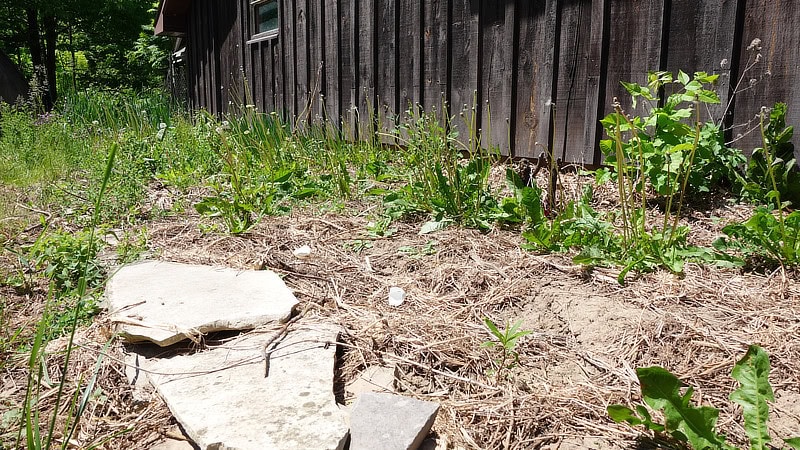
Companion planting is when you position certain plants in close proximity to each other in the garden because one of them benefits the other, or they benefit each other.
The benefits could include reducing disease/insect pests/weeds, improving soil health, attracting beneficials such as pollinators and pest predators, providing physical support, providing shade, or simply making more efficient use of space.
Or sometimes we avoid certain combinations because a plant can have a negative impact on another.
I won’t get into too many specifics here because there are infinite possibilities, but here are a few combos that have been scientifically tested:
- Peas and lettuce are cool-season crops, often some of the first things sown in the garden. When planted together, the peas (which require some form of vertical support) provide shade and a small amount of nitrogen to the lettuce.
- Corn makes a good trellis for pole beans. You just need to sow the corn seed a few weeks ahead and let it get 4-6 inches tall before sowing the bean seeds underneath. The beans may provide a little nitrogen to the corn. You can also sow a few vining squash along with the beans to provide a ground cover. This Indigenous American combination is often referred to as the “Three Sisters.”
- If you have squash bugs and/or squash vine borers on your squash family plants, then next year, plant some Blue Hubbard squash, which will lure the pests away from the other squash because Blue Hubbard is their favourite. Plant the Hubbards a few weeks before the other squash.
- If you have Colorado potato beetles on your potatoes, plant tansy and catmint among them.
A challenge with companion planting is that, although you’ll come across no shortage of recommendations, when you look for research, it often doesn’t exist, or if you find some, it’s often not so clear whether a certain combination is actually all that good.
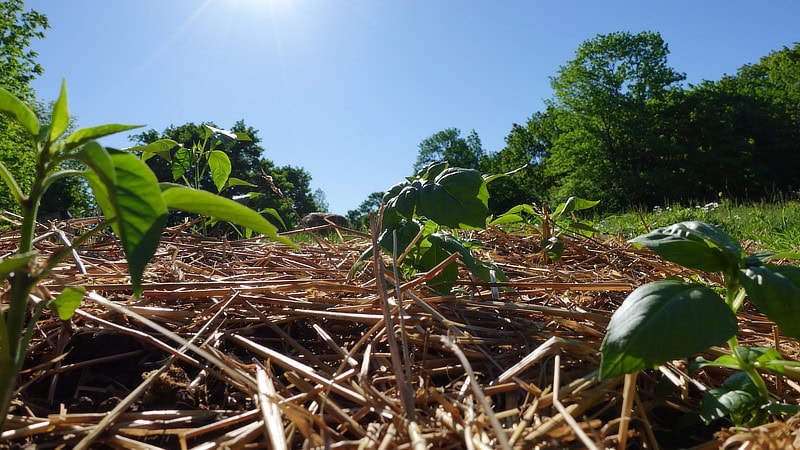
Having read through many studies over the years, I don’t get too picky about choosing specific combinations, but I do plant many types of plants in close proximity with the expectation that the overall result will be better.
This is called a polyculture (as opposed to a monoculture). Although it could be as simple as mixing everything together all throughout the bed, there’s usually a little more order than that.
The way I tend to do it is I have a few plants that are my main crops, for example, tomatoes, potatoes, squash, beans, and broccoli. I may plan the garden around them and then, among each of them, plant several smaller crops.
Polycultures can suppress weeds by having plants with varying heights and leaf types that more thoroughly shade the soil, as well as by releasing different chemicals into the soil that prevent some weeds from germinating.
A polyculture can confuse pests while also providing habitat for their predators.
It can also utilize soil nutrients, water, and temperature fluctuations more effectively. In some years, some crops do better than others, so if you have each area of the garden planted with multiple crops, you’ll be more likely to have something do well.
Yields from each crop are usually lower, but overall yields from a given area are higher.
This can be as informal as mixing many plants together in a bed, or, if you want to keep things cleaner, you can do one row of X and then one row of Y, and so on.
The most important thing to remember is that many herbs are useful companions, so I encourage you to plant them liberally among your vegetables.
Just like animals, plants are categorized into families.
The most common plant families in a vegetable garden are:
- Allium. E.g. Garlic, leek, onion, scallion, shallot.
- Amaranth. E.g. Beet, spinach, Swiss chard.
- Brassica. E.g. Broccoli, Brussels sprouts, cabbage, cauliflower, kale, radish.
- Cucurbit. E.g. Cucumber, pumpkin, squash, zucchini.
- Legume. E.g. Bean, pea, peanut.
- Solanum. E.g. Eggplant, pepper, potato, tomato.
- Examples from other families. Carrot, corn, lettuce.
It’s worthwhile to know which family each plant belongs to because, ideally, we “rotate” (i.e. move) families to a new spot in the garden every year.
An example: if I grow broccoli in one spot this spring, I will do my best to find a new spot to plant broccoli and all other members of the Brassica family in the fall, and again next year, and perhaps for a few years.
Plants from the same family are often eaten by the same insects and diseases, and in some cases, moving them to a different spot from year to year (sometimes even from season to season) can reduce that pest pressure.
Crop rotation has other benefits, similar to companion planting – it can decrease weed growth, improve soil quality, and increase yields.
I’ve seen 7-year rotations where members of the same family are planted in an area only once every 7 years.
Grouping your families together can help simplify this rotation process, for example, growing broccoli, cabbage and kale in the same area and moving them together year to year. The downside of that, though, is if you get an insect that eats all of them, you’re just making it easier for the pest.
That’s why crop rotation can get quite tricky in a diverse vegetable garden with dozens of plants. Rotation certainly makes sense in a monoculture, where, instead of growing corn every year, a farmer may do beans one year, then corn the next year, and any number of plants in subsequent years.
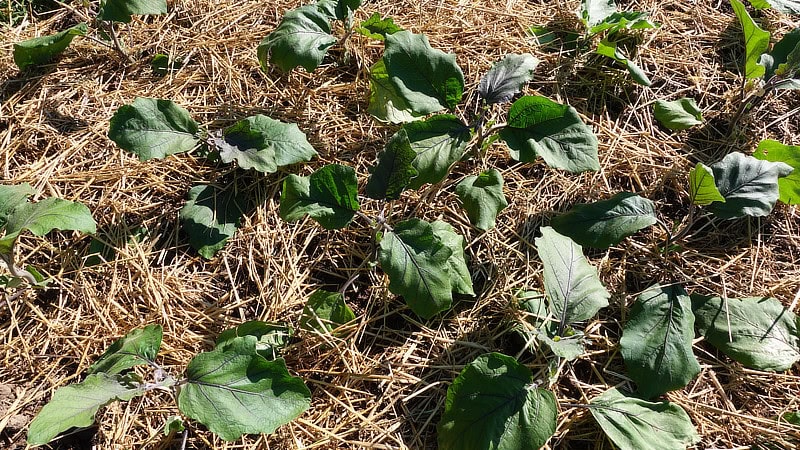
In a home garden, crop rotation makes the most sense when you have a few crops that are especially important to you and you rotate them, concerning yourself less with the other plants.
I encourage you to take some notes (and photos) in case you want to get into rotating your crops next year.
One point of clarification: The previous lesson was about companion planting and polycultures. It’s possible to take a polyculture to such an extreme that all plants get intermingled together across the whole garden, which makes crop rotation virtually impossible.
I’m not sure which would be better: interplanting all plants across the entire garden with no crop rotation, or full separation of plant families with careful rotation. I expect there’s a happy medium, with some companion planting and some crop rotation.
Planting doesn’t have to happen all at once in the spring.
Even plants that take longer to mature, like tomatoes, can be planted in two or three sessions over the course of a month to spread out the summer harvest.
And some seeds can be sown (to “sow” a seed simply means to plant it) every couple of weeks throughout the spring and summer to get an extended harvest.
Staggered planting like this can also decrease pest problems, as the earlier plants may encounter issues that are avoided by the later plants, and vice versa.
When sowing seeds during hot months, it can be beneficial to sow them a little deeper to provide some protection from the heat. Covering the bed with shade cloth can also help keep the soil cooler.
Going back to our main plant families:
- Allium. E.g. Garlic, leek, onion, scallion, shallot. Mostly planted once/year, but scallions and shallots can be planted regularly.
- Amaranth. E.g. Beet, spinach, Swiss chard. Can be planted regularly throughout the year.
- Brassica. E.g. Broccoli, Brussels sprouts, cabbage, cauliflower, kale, radish. Can be planted regularly, but most of them don’t like to mature in the summer heat, so you may take a break from planting them in late spring, but then start again in summer for a fall crop.
- Cucurbit. E.g. Cucumber, pumpkin, squash, zucchini. Mostly planted once/year, especially because most people don’t need many plants since these are so productive, but you can definitely plant them in 2-3 stages to extend the harvest and prevent some pest problems.
- Legume. E.g. Bean, pea. Can be planted regularly, but peas don’t like the heat, so take a break in late spring.
- Solanum. E.g. Eggplant, pepper, potato, tomato. Mostly planted once in spring for harvest in the summer, although if you live in a warmer climate, you can also do a planting in late summer for a winter harvest.
- From other families. Carrots can be planted regularly. Corn could be planted 2-3 times in spring. Lettuce can be planted regularly, although many lettuces don’t like summer heat.
Herbs:
- Perennials are generally just planted once. E.g. Chives, Mint, Oregano, Sage, Thyme.
- Annuals could be planted regularly. E.g. Basil, Cilantro, Dill, Parsley.
There’s no special formula for this. Just choose some plants that you’d like to have more of and plan to sow them regularly, perhaps every couple of weeks.
I especially do this with different types of lettuce and other greens, but you may decide to include beets, bush beans, carrots, and others.
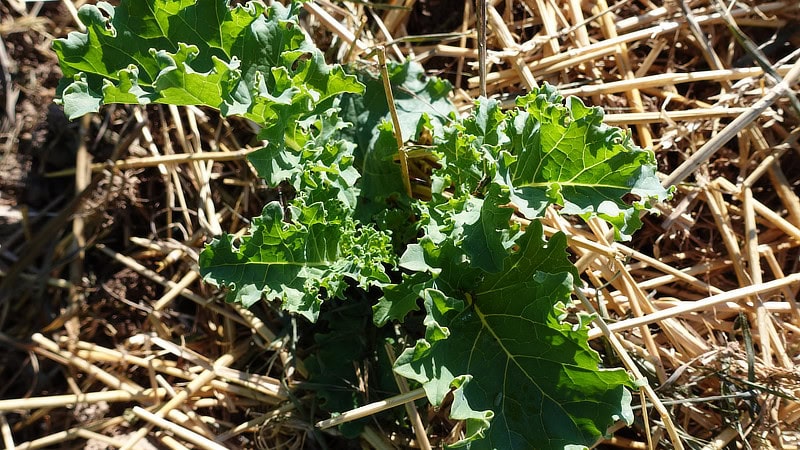
Most food plants require full sun, which, in horticulture, means at least six hours of direct sunlight per day. However, for most food plants, 10 hours or more a day is preferable.
If you don’t have full sun, there are some plants that grow in part shade, even if they take longer to mature and don’t get as big. Your main options include various lettuces and greens, numerous herbs, and a wide range of root vegetables.
If you do have good sun and you’re growing tall plants like climbing tomatoes or beans, it’s best to put them on the side of the bed that allows the rest of the garden to remain in full sun, unless you’re growing some plants that like a little shade, in which case, you may use the climbing plants to provide shade for them.
The spacing between plants in the garden varies depending on the type of plant. Planting in rows is fine, although if you’re an efficiency nerd, you can get about 15% more plants if you plant in a hexagon pattern.
Either way, you don’t have to have big rows between plants. Farmers plant in rows with wide spaces between them, allowing their tractors to drive through the field during the growing season.
You can plant things closer together, which reduces soil moisture evaporation, decreases weeds, and protects the soil.
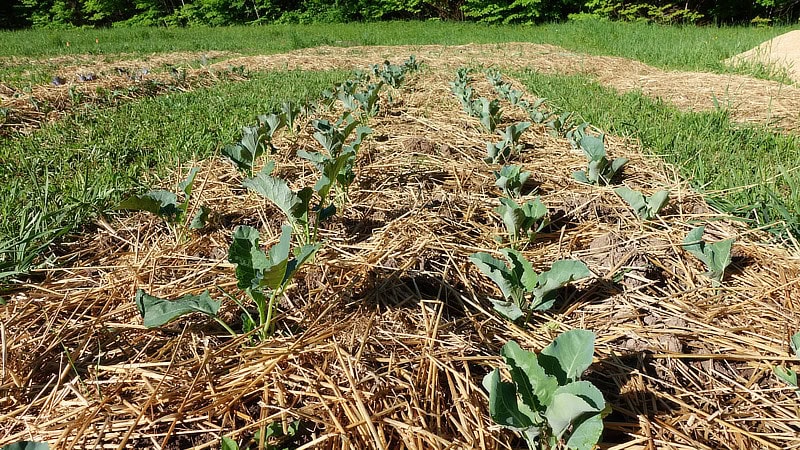
There’s no magical way to lay out a garden, and although I’ve seen charts of how many of each type of plant to grow per person, the truth is that it’s entirely up to you.
What I will give you is a general idea of some things most people don’t need many of, and other things for which you may plant dozens of plants:
- 1-4 per person. Cucumber, Eggplant, Pepper, Squash, Tomato, Zucchini, Herbs (each).
- 10-ish per person. Bean, Pea, Potato.
- Dozen(s) per person. Beet, Broccoli, Cabbage, Carrot, Corn, Garlic, Kale, Lettuce, Onion, Radish, Spinach, Swiss chard.
To summarize these planting preparation lessons, here are the main things to remember:
- Grow whatever you want to grow, whether it’s what you eat the most, what is most expensive to buy, what grows best in your soil and climate, or some other criteria.
- Feel free to intermingle your plants in polycultures, as the benefits of having them together are many.
- Take note (and photos) of where everything is planted so you can consider moving them to a different spot next year.
- Plan on having at least a couple of plant types that you continue to plant successively throughout the season.